
How to Choose the Right Ballistic Helmet for Military, Police, and Security Teams
How to Choose the Right Ballistic Helmet for Military, Police, and Security Teams
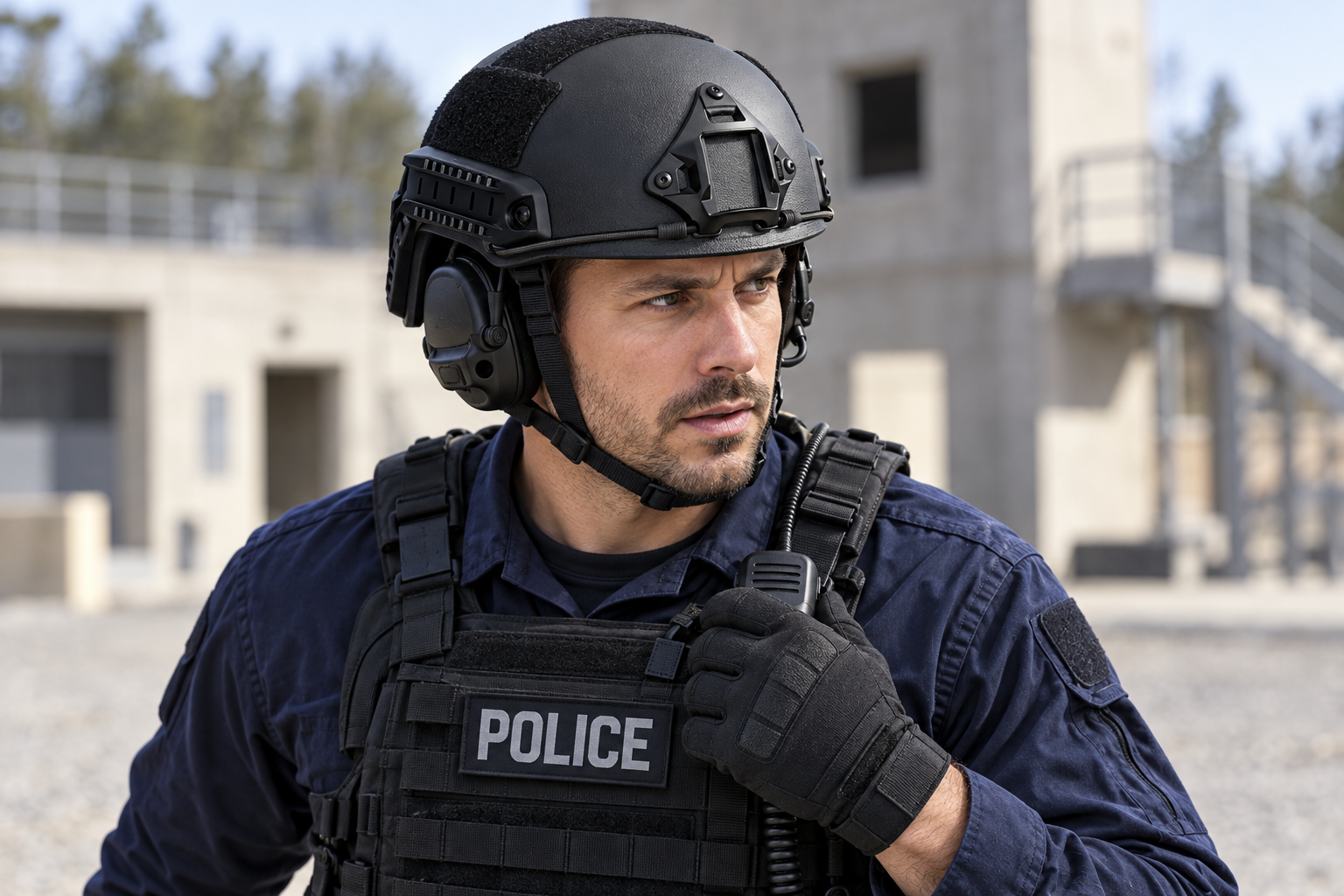
A ballistic helmet should match the threat, fit the wearer, and work with the equipment already in use. A team that relies on over-ear communications may prioritize a high-cut profile. An agency seeking more shell coverage around the ears may prefer MICH/ACH or PASGT. When the requirement includes specific rifle rounds, the selection needs to go beyond a handgun-threat helmet.
This guide compares the main options in the ExecDefense USA ballistic helmet range and explains how to narrow the choice for military personnel, police departments, law enforcement agencies, and professional security teams.
Start with the Threat, Then Choose the Shape
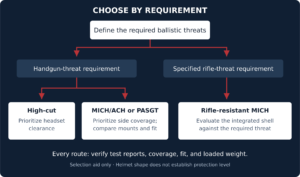
“High-cut,” “MICH,” and “PASGT” describe helmet styles. They do not, by themselves, establish ballistic performance. Two helmets with similar silhouettes can have different materials, test results, and protection limits.
Begin with your agency’s threat assessment: which projectiles and velocities must the helmet address? Then compare coverage, communications compatibility, fit, and the weight of the complete configuration. The use scenarios below are selection starting points; final approval should depend on the exact model’s documentation and your organization’s requirements.
High-Cut: Room for Communications Equipment
The EDI-USA High-Cut Helmet is a useful starting point when the helmet must work with over-ear communications. Its raised sides provide clearance, while included side rails, front mount, and bungees support compatible accessories. The listed configuration also includes seven interior pads and a ratchet adjustment system.
Where it fits: Police response teams, military users, and professional security personnel who depend on communications and need the listed III-A/HG2 ambient-tested performance. Evaluate it with the actual headset and mounting adapters your team uses.
Selection tradeoff: Increased ear-area clearance leaves less shell coverage there than lower-cut profiles. A headset does not replace ballistic shell coverage.
MICH / ACH: Coverage with a Padded Fit
The EDI-USA MICH (ACH) Helmet offers a profile extending around the ears, a padded interior, and adjustable retention. EDI lists III-A and HG2 ambient testing, along with STANAG 2920 fragmentation testing.
Where it fits: Agencies evaluating a general-issue ballistic helmet, including police, military, and security organizations that prioritize side coverage. Available suspension options allow buyers to discuss fit preferences before ordering.
Selection tradeoff: Check clearance with over-ear hearing protection and communications equipment. Fit depends on the exact combination, even when individual components are described as compatible.
MICH / ACH with Rails: Coverage Plus Attachment Points
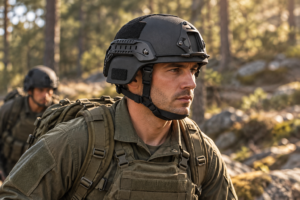
The MICH (ACH) Helmet with Side Rails and Front Mount adds mounted rails, a front night-vision mount, bungees, and exterior hook-and-loop attachment areas to the MICH configuration.
Where it fits: Law enforcement and military teams that prefer the MICH profile but need mounting provisions for compatible equipment. It is worth evaluating when a department wants to standardize both helmets and accessories.
Selection tradeoff: Rails and mounts do not increase the ballistic rating. Attached equipment changes the helmet’s weight and balance, so assess the complete setup.
PASGT: A Traditional Protective Profile
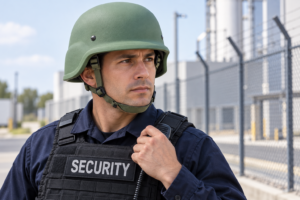
The EDI-USA PASGT Helmet combines a traditional shell profile with coverage around the ears, mesh interior suspension, and adjustable retention. EDI lists III-A/HG2 ambient and STANAG 2920 testing; custom markings and a boltless option are also available to discuss.
Where it fits: Facility protection, corrections, police, and other security assignments where the specified ballistic protection is required and a traditional configuration suits the equipment program.
Selection tradeoff: Trial the brim and suspension with eye protection, communications gear, and any required face protection. A ballistic PASGT should not automatically be treated as a certified riot helmet.
Rifle-Resistant MICH: Integrated Rifle Protection
The Rifle-Resistant MICH Helmet incorporates rifle-resistant construction without separate external rifle covers. EDI lists testing against one shot of 7.62×51 M80 FMJ, a size-L weight of approximately 4.4 lb (2.0 kg), a ratchet fit system, and optional rails and front mount.
Where it fits: Military, police, and security programs seeking an integrated MICH-style option for a documented M80 threat requirement.
Selection tradeoff: Evaluate loaded weight and comfort over the intended wear period. A specific single-shot M80 claim is not a claim of resistance to every rifle cartridge, armor-piercing ammunition, or multiple impacts.
Understanding Protection Labels and Test Standards
III-A and HG2: Look Beyond the Label
NIJ’s newer terminology uses “HG” for handgun threats and “RF” for rifle threats. Its NIJ Standard 0123.00 overview maps the former IIIA designation to HG2, but this does not make older and newer test requirements identical or automatically upgrade a product’s rating.
For helmets, ask which test method was used, which rounds and velocities were tested, and whether testing covered ambient conditions only or additional conditioning.
STANAG 2920 and V50: Fragmentation Performance
Several EDI helmets list STANAG 2920 fragmentation testing. V50 describes the estimated velocity at which a specified test projectile has a 50% probability of penetrating the test material. NIST explains the V50 measurement and its uncertainty.
Compare the actual V50 result alongside the projectile type, mass, and test conditions. A fragmentation result does not establish resistance to a particular rifle round.
ISO 9001: Quality Management
ISO 9001 concerns an organization’s quality management system. It is useful manufacturing context, but it does not specify which bullets a helmet can resist. Review quality-system documentation and ballistic test evidence as separate items.
Fit and Accessories Can Decide the Final Choice
The U.S. Army’s Advanced Combat Helmet overview describes the importance of pads and retention to impact protection, stability, and fit. It is useful background, rather than evidence that a commercial helmet meets an Army specification.
For your team’s evaluation, consider the following:
Size and stability: Use the model’s sizing instructions and confirm that the helmet stays properly positioned during normal head movement.
Approved interior configuration: Use the required pads and retention components. Do not remove protective padding simply to squeeze in a headset.
Complete equipment compatibility: Trial eyewear, hearing protection, communications, and any required respirator or visor together.
Weight and balance: Compare the fully equipped helmet, including mounts, covers, and accessories.
Maintenance: Obtain inspection, cleaning, replacement, and service-life instructions for the exact configuration.
Face protection also requires its own review. Browse the ballistic visors and accessories in our helmet category, then confirm the correct attachment system and the visor’s separate protection claim. Adding a rifle-resistant visor does not upgrade the surrounding helmet shell.
Build a Helmet Specification Around Your Team
A useful quote request includes the intended role, required ballistic threats, preferred coverage, sizing needs, communications equipment, accessory requirements, quantities, and procurement conditions. Military buyers should also identify applicable contract specifications; a military-style appearance is not evidence of compliance with them.
For a department-wide purchase, ask about a test-and-evaluation sample before finalizing the configuration. A hands-on fit review can reveal issues that a specification sheet cannot.
Need Help Narrowing the Options?
Contact ExecDefense USA to discuss helmet selection, available test documentation, fit options, and agency quotations. You can also explore the complete ballistic helmet range.
Product descriptions reflect the linked EDI-USA listings reviewed October 14, 2026. Confirm current specifications and configuration-specific documentation before purchase. No helmet provides protection against every threat or eliminates the possibility of injury.